



Frequently Asked Questions
-
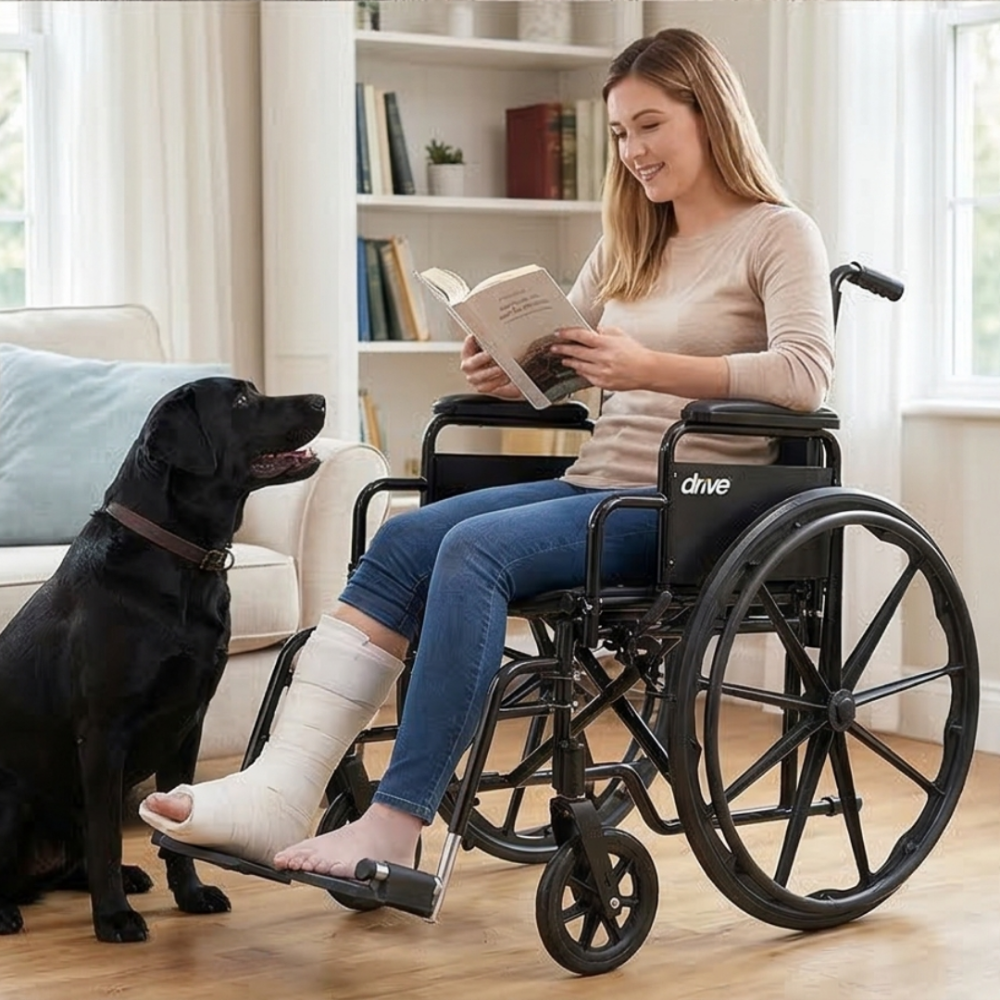
The Drive Medical Cruiser X4 Wheelchair is ideal for users who need a reliable, adjustable manual wheelchair for daily mobility. It’s well suited for seniors, individuals with temporary or long-term mobility needs, and users who want a comfortable chair that can be tailored to their body and seating preferences.
-
The Cruiser X4 offers multiple adjustment points, including seat-to-floor height (17”, 18”, or 19”), seat depth (16”–18”), and back height (16”–17.5”). These adjustments help improve posture, comfort, and overall fit for a wide range of users.
-
Yes. The Cruiser X4 features a foldable frame that collapses to just 12” wide, making it easy to store in car trunks, closets, or tight spaces. This makes it practical for transport, appointments, and everyday use outside the home.
-
Absolutely. Designed for regular daily use, the Cruiser X4 provides dependable performance in Canadian homes, care facilities, and community settings. Its sturdy construction supports users up to 300 lbs, making it a reliable choice for consistent mobility support.
-
Yes. The lightweight, foldable design and adjustable components make the Cruiser X4 easier for caregivers to handle, transport, and adapt to different users. Its practical setup supports both independent use and assisted mobility.
Compare Lightweight Wheelchairs
Not sure which wheelchair fits your needs? Here's how the AeroFly Ultra-Lite compares to two other popular options available at Care Made Canada.
| Features |
Lightest Option

AeroFly Ultra-Lite Wheelchair
Lightest manual wheelchair for travel
|
Best Everyday Value

Cruiser X4 Wheelchair
Reliable everyday manual wheelchair
✓ Dual-axle height adjustable
✓ Folding aluminum frame ✓ Up to 300 lb capacity |
Most Adjustable

Viper Plus Reclining Wheelchair
Adjustable comfort for daily care
|
|---|---|---|---|
| Type | Ultra-Light Folding | Standard Folding | Reclining Folding |
| Chair Weight | 19 lbs (13.3 lbs without wheels) | ~34 lbs | ~50 lbs |
| Frame Material | Magnesium Alloy | Aluminum & steel blend | Steel |
| Weight Capacity | 250 lbs | 300 lbs | 300 lbs |
| Seat Width | 18" | 16" / 18" / 20" | 16" / 18" / 20" |
| Foldable | ✓ | ✓ | ✓ |
| Reclining Back | ✘ | ✘ | ✓ |
| Quick-Release Wheels | ✓ | ✓ | ✓ |
| Best For | Travel & Active Use | Everyday Value | Long-Term Care |
| Main Benefit | Lightest, easiest to carry & pack | Multiple seat widths, solid value | Full recline for comfort & positioning |
| Price | $714.95 | $379.00–$449.00 | $1,199.00 |
| View Product | View Product | View Product |
Need help choosing? Contact our team, we're happy to help you find the right fit.